


- Create or log in to your AWS Certification account.
- Select the AWS DevOps Engineer – Professional exam.
- Choose online or test-center-based exam mode.
- Pick a suitable exam date and time.
- Complete the exam registration and payment.
- Prepare valid identification documents.
- Review exam guidelines before the test day.
- Attempt the exam within the scheduled duration.
- Receive results after completion.
- Use certification to boost your career growth.
Frequently Asked Questions

It is an advanced-level AWS certification for DevOps professionals.
It validates automation and CI/CD skills on AWS.
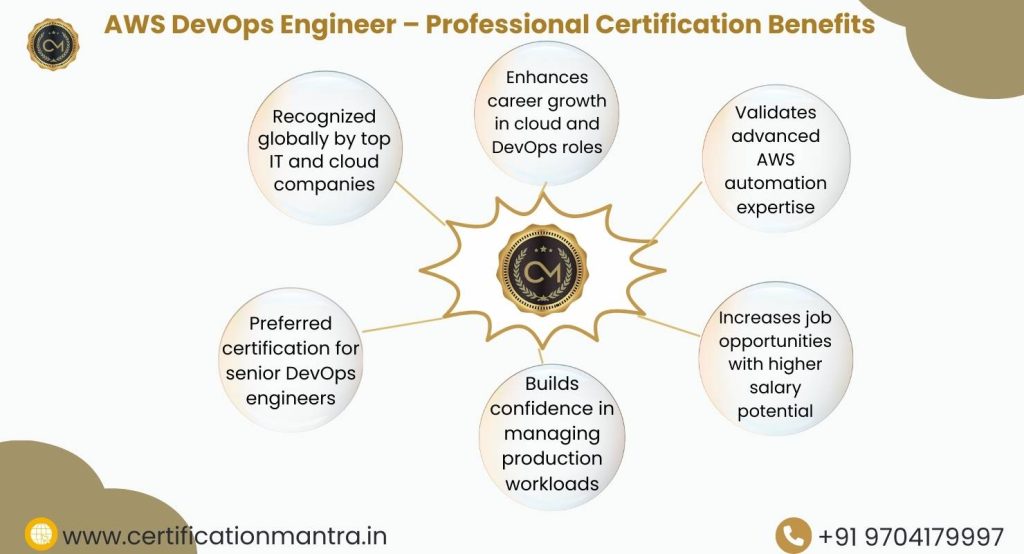
It is globally recognized by enterprises.
Experienced DevOps and cloud engineers.
Professionals managing AWS automation pipelines.
Candidates aiming for senior DevOps roles.
No, it is designed for experienced professionals.
Prior AWS knowledge is required.
Hands-on experience is strongly recommended.
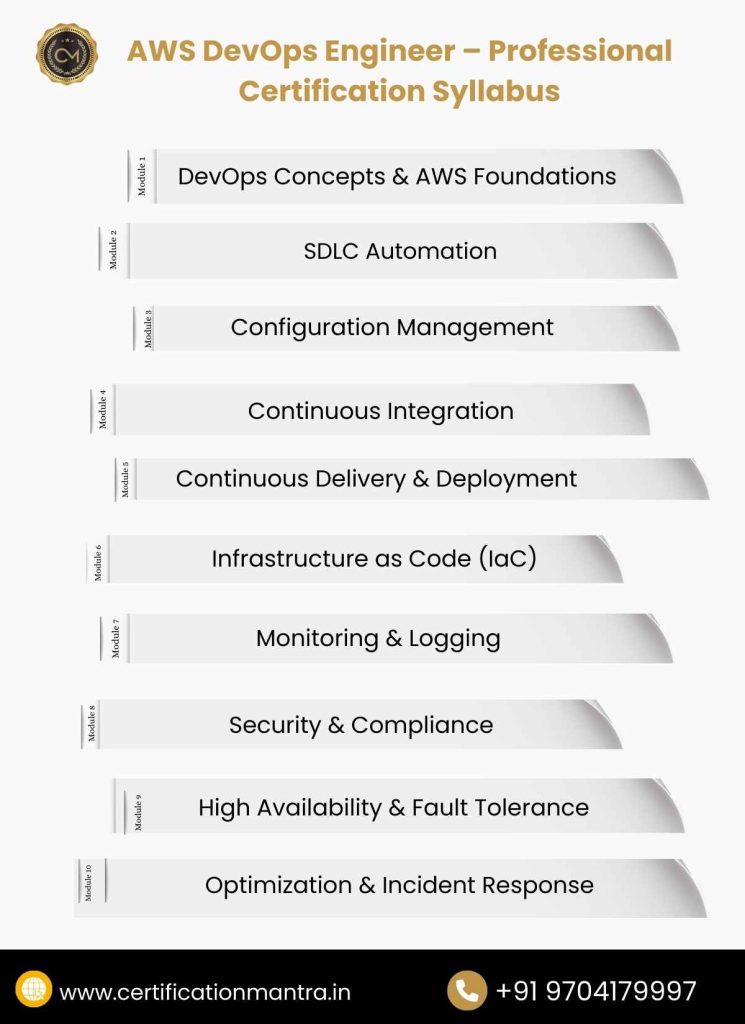
CI/CD implementation on AWS.
Monitoring, logging, and automation.
Security and compliance practices.
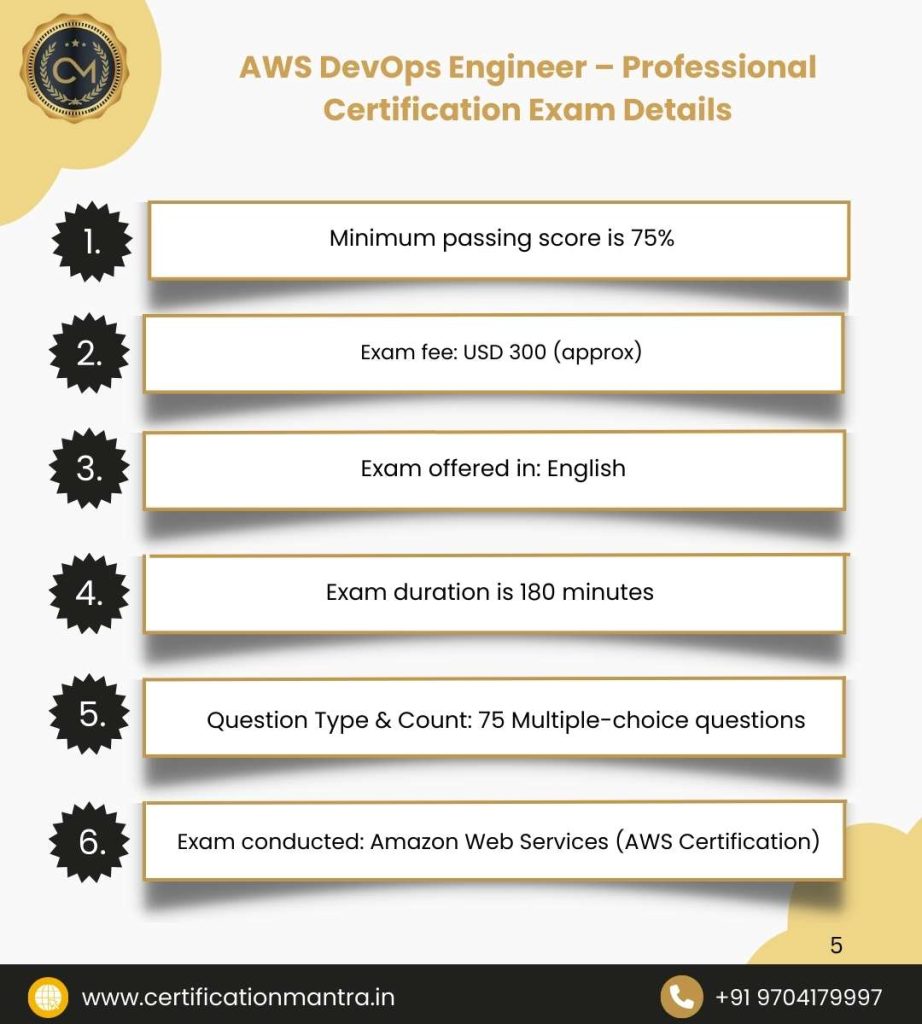
Scenario-based multiple-choice questions.
Multiple-response questions included.
Real-world AWS use cases tested.
The exam duration is 180 minutes.
Extra time may be provided for non-native speakers.
Time management is important.
AWS does not officially publish exact scores.
Results are shown as pass or fail.
Scaled scoring is used.
No direct coding is required.
Conceptual and scenario understanding is tested.
Hands-on knowledge helps greatly.
Yes, AWS offers online proctored exams.
Test-center options are also available.
Both follow the same format.
There is no limit on attempts.
A 14-day gap is required after failure.
Each attempt requires full payment.
No, it is valid for 3 years.
Recertification is required after expiry.
Staying updated with AWS is important.
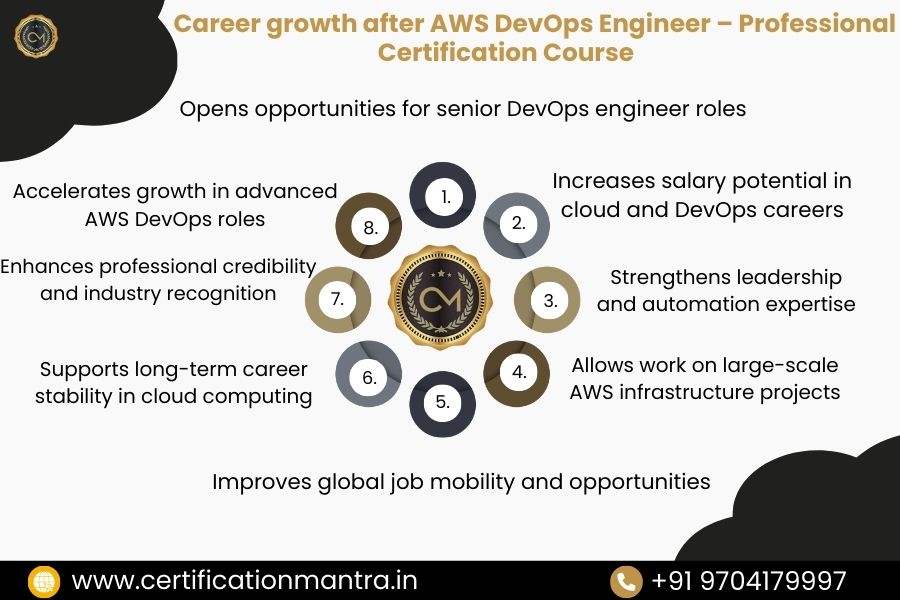
Yes, it increases earning potential.
It qualifies you for senior DevOps roles.
Certified professionals are in high demand.
Training is not mandatory.
But structured learning improves success rates.
Structured AWS DevOps training provides practical guidance for success.
CodePipeline, CodeBuild, and CodeDeploy.
CloudFormation and CloudWatch.
IAM and security services.
Preparation time varies by experience.
Typically ranges from 2 to 3 months.
Hands-on practice speeds learning.
Yes, mock exams improve confidence.
They help understand exam patterns.
Weak areas can be identified easily.
It is not recommended for freshers.
Prior AWS experience is expected.
Associate-level certification is preferred first.
Senior DevOps Engineer.
Cloud Engineer and DevOps Architect.
Platform and Automation Engineer.
Basic Linux knowledge is helpful.
Many AWS services run on Linux systems.
It improves troubleshooting ability.
Yes, AWS provides exam guides.
Whitepapers and documentation are available.
Hands-on labs are also recommended.
Yes, rescheduling is allowed.
Must be done at least 24 hours before exam time.
Late rescheduling may forfeit fees.
Yes, AWS certifications are globally recognized.
Accepted by MNCs worldwide.
Useful for international career opportunities.
Yes, it strengthens professional credibility.
Supports leadership and senior roles.
Often considered for promotions.
The exam is considered challenging.
It focuses on real-world scenarios.
Strong preparation is essential.
Yes, hands-on experience is crucial.
Concept-only learning is not sufficient.
Practical exposure improves success.
Yes, it supports transition into DevOps roles.
Cloud professionals benefit the most.
Experience accelerates career switch.
Follow the exam blueprint strictly.
Practice real AWS DevOps scenarios.
Join structured training programs.
Yes, it expires after 3 years.
Recertification is required.
AWS updates services regularly.
Professional level is more advanced.
It validates deeper technical expertise.
Associate is recommended first.
Industry-focused curriculum and mentors.
Hands-on labs and exam guidance.
Preferred choice for practical and result-oriented AWS DevOps Professional training.