


Frequently Asked Questions

- SAP S/4HANA Asset Management is a digital solution that manages equipment, maintenance tasks, and asset performance. It helps organisations streamline repairs and reduce downtime. It improves reliability through real-time planning and reporting.
- It enables businesses to maintain assets efficiently and avoid unexpected failures. Companies use it to improve productivity, safety, and operational performance. It supports long-term asset lifecycle planning.
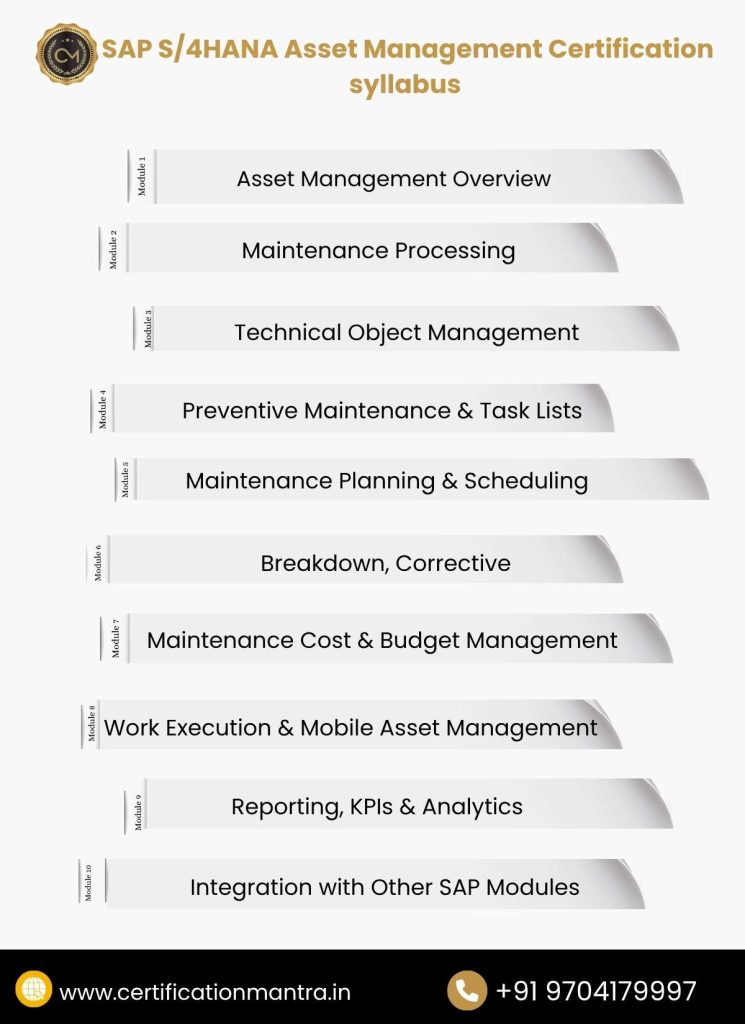
- The training covers maintenance processes, technical objects, task lists, work orders, and scheduling. You also learn analytics, integration, and preventive maintenance. It prepares you for both system usage and certification.
- Maintenance engineers, planners, SAP consultants, and operations professionals benefit the most. It’s also ideal for freshers entering the SAP ecosystem. Anyone managing equipment or maintenance workflows can learn it.
- Basic knowledge of maintenance operations is helpful. Any experience with SAP navigation adds value. Completing SAP S/4HANA Asset Management Certification Training in Hyderabad strengthens understanding.
- The exam typically lasts around 2–3 hours, depending on the version. It includes scenario-based questions on maintenance processes. You must manage your time well during the exam.
- The exam usually consists of multiple-choice questions. Many questions focus on real-time process understanding. You must apply concepts rather than memories definitions.
- The number of questions varies by version but usually ranges between 80–90. Each question carries equal weight. Scoring is based on correct answers only.
- The exam is moderate if you understand processes well. Hands-on practice makes it easier. Good revision and training improve confidence.
- Practice end-to-end maintenance flows and real-time use cases. Study important topics like notifications, orders, and preventive plans. Take mock tests regularly to assess progress.
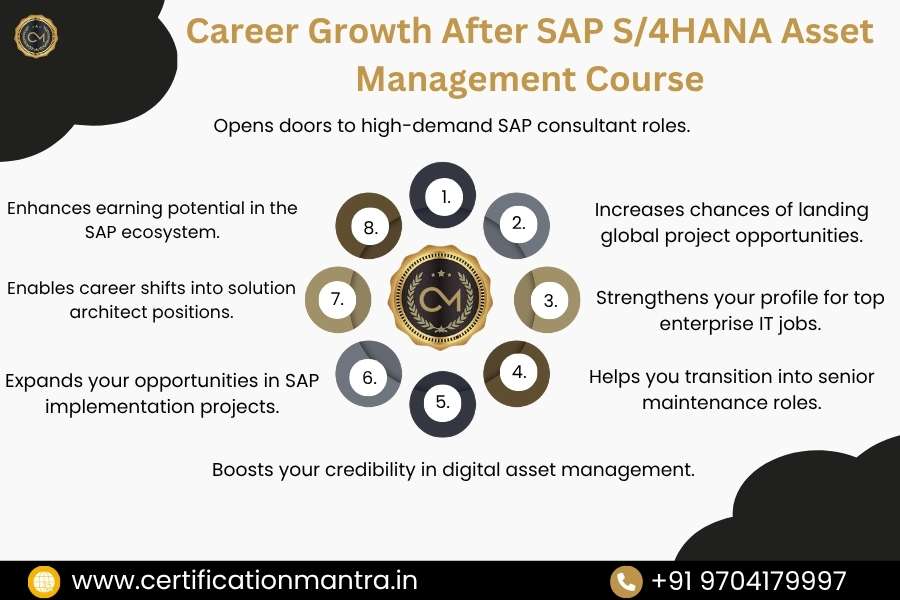
- You can work as a SAP PM Consultant, Maintenance Planner, Asset Analyst, or Support Engineer. Many companies hire certified professionals for implementation projects. It opens opportunities across manufacturing and asset-heavy industries.
- Yes, freshers can start with this module if they understand industrial operations. Training builds strong fundamentals for beginners. Certification increases job opportunities significantly.
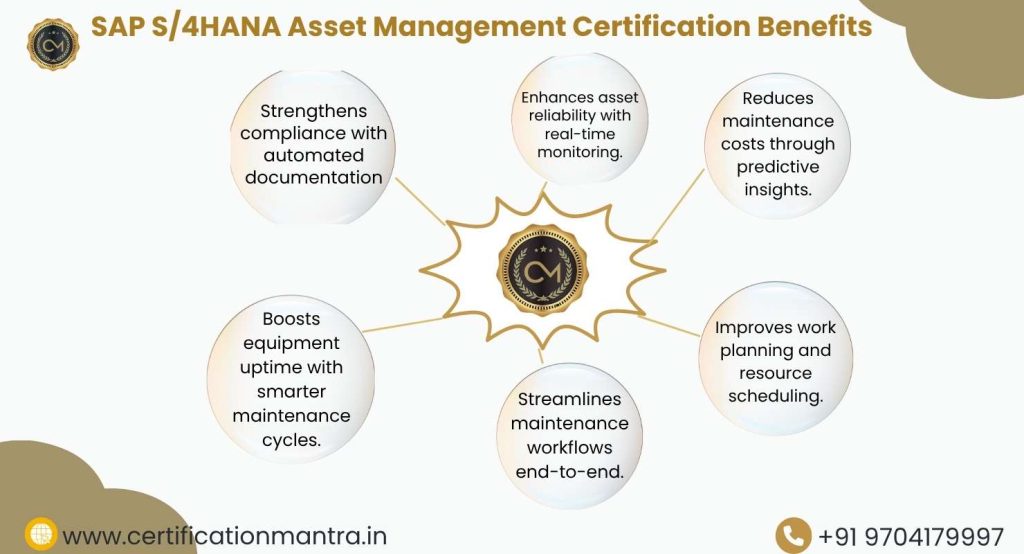
- It improves equipment uptime, reduces maintenance costs, and enhances safety. Organizations can plan repairs more efficiently. It supports digital transformation in maintenance.
- No coding is required for functional roles. You need strong process understanding instead. Configuration skills may be needed for advanced roles.
- Preventive maintenance focuses on scheduled servicing. You create task lists and plans to avoid breakdowns. SAP automates reminders and scheduling.
- It’s a document used to report a problem or request maintenance. It helps track issues from start to finish. Notifications form the basis for work orders.
- A work order defines the tasks, materials, and labour needed for maintenance. It helps technicians perform tasks step by step. It tracks costs and execution progress.
- Technical objects include equipment, functional locations, and serial numbers. They create the structure for asset tracking. They form the starting point for all maintenance processes.
- Yes, SAP provides real-time dashboards and KPIs. You can track breakdowns, costs, and performance instantly. Analytics helps identify improvement areas.
- It is unplanned repair work after an equipment failure. SAP helps record the issue, assign technicians, and complete the repair. It ensures quick turnaround during emergencies.
- Yes, it integrates with MM, PP, FI, and Inventory. This ensures a smooth flow of materials, costs, and production data. Integration makes maintenance more efficient.
- Absolutely, many professionals switch to SAP through Asset Management. It’s a high-demand module with global opportunities. Training makes the transition smooth.
- Manufacturing, oil & gas, utilities, pharma, aviation, and engineering sectors rely heavily on it. Any asset-intensive industry uses SAP for maintenance. It’s widely accepted across global organisations.
- Passing percentage varies by exam version. Typically, candidates need around 65–70% to pass. Training helps you achieve this easily.
- With consistent effort, it takes 4–8 weeks to learn. Hands-on practice speeds up understanding. Structured training makes the learning journey easier.
- Yes, SAP offers online proctored exams. You can take it from home with proper system readiness. Ensure good internet and a quiet environment.
- Yes, good training explains real-time workflows used in industries. You learn scenarios used by maintenance teams. This prepares you for job roles better.
- Yes, SAP certifications are respected worldwide. It boosts your resume for international opportunities. Many global companies prefer certified professionals.
- It helps you enter the SAP consulting space with strong domain value. You can grow into roles like Solution Architect or Lead Consultant. Demand for SAP PM/S4 consultants continues to rise.
- Hyderabad offers top-quality trainers, hands-on labs, and industry exposure. Many learners choose this city for affordable and effective SAP training. It helps you complete certification with strong practical skills.