

Frequently Asked Questions

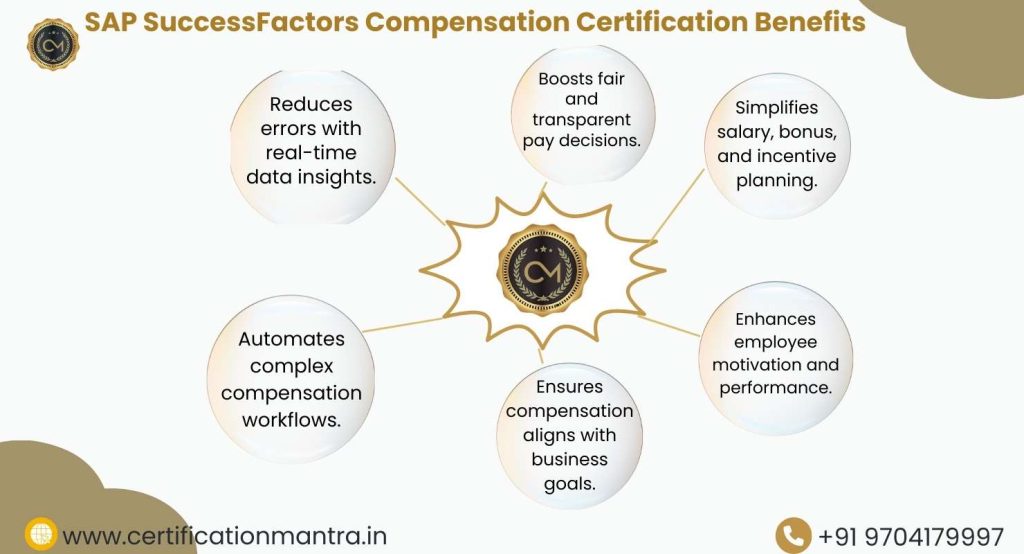
- SAP SuccessFactors Compensation is a cloud-based tool that helps companies manage salary, bonus, and incentive planning efficiently. It automates compensation cycles with rules and workflows. This ensures fair and consistent employee rewards across the organisation.
- The module simplifies complex compensation processes and eliminates manual spreadsheets. It gives HR teams a structured system for salary planning and approvals. This results in better accuracy, compliance, and transparency.
- HR professionals, payroll specialists, SAP consultants, and freshers aspiring to work in HR technology can learn this module. It suits anyone looking to understand digital compensation systems. Learners gain strong career opportunities after training.
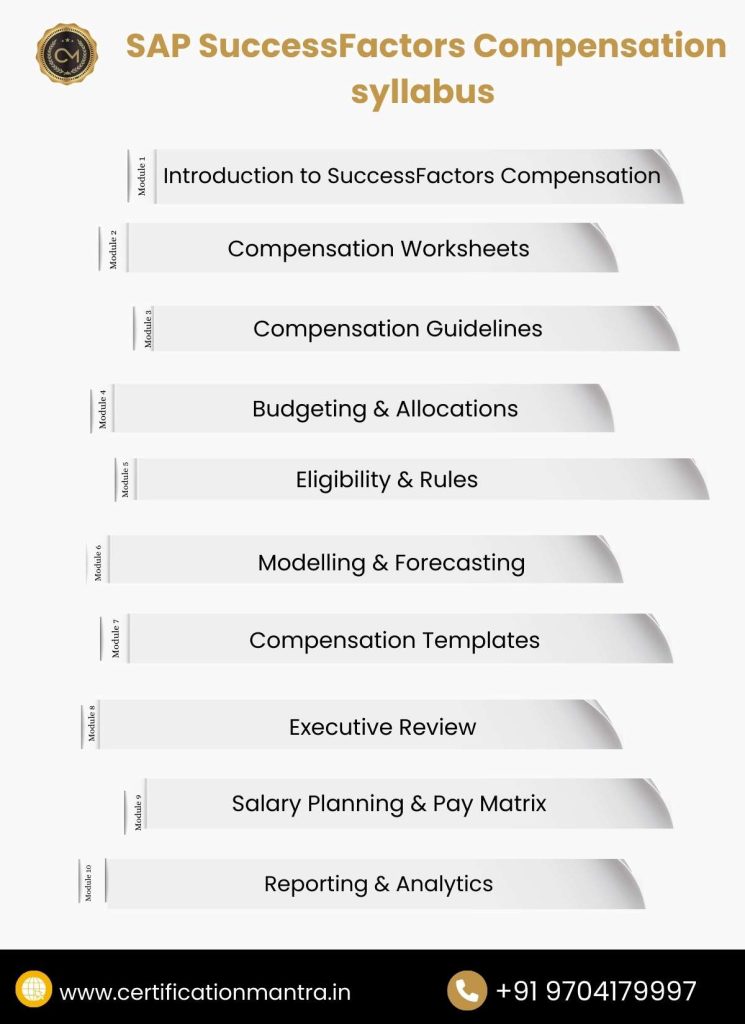
- The module includes budgeting tools, pay matrix setup, compensation worksheets, and executive review. It supports salary adjustments, promotions, and bonus planning. Real-time analytics help leaders make data-driven decisions.
- It integrates smoothly with Employee Central, Performance, and Goals for complete HR data flow. Performance ratings, employee structures, and salary ranges move automatically into Compensation. This integration ensures consistent and accurate planning.
- No coding is required to work with this module. Everything is configuration-based using business rules and system settings. This makes it beginner-friendly, especially for HR professionals.
- A compensation worksheet is a digital sheet used by managers to allocate salary changes, bonuses, and promotions. It displays all employee information required for planning. Managers follow guidelines and budgets to make accurate decisions.
- A pay matrix defines structured salary ranges used by companies for fair pay decisions. It sets minimum, midpoint, and maximum pay values. This helps HR maintain consistent salary alignment.
- Executive review allows leaders to view consolidated compensation data. They can review, approve, or return worksheets for corrections. This ensures accurate compensation distribution before final release.
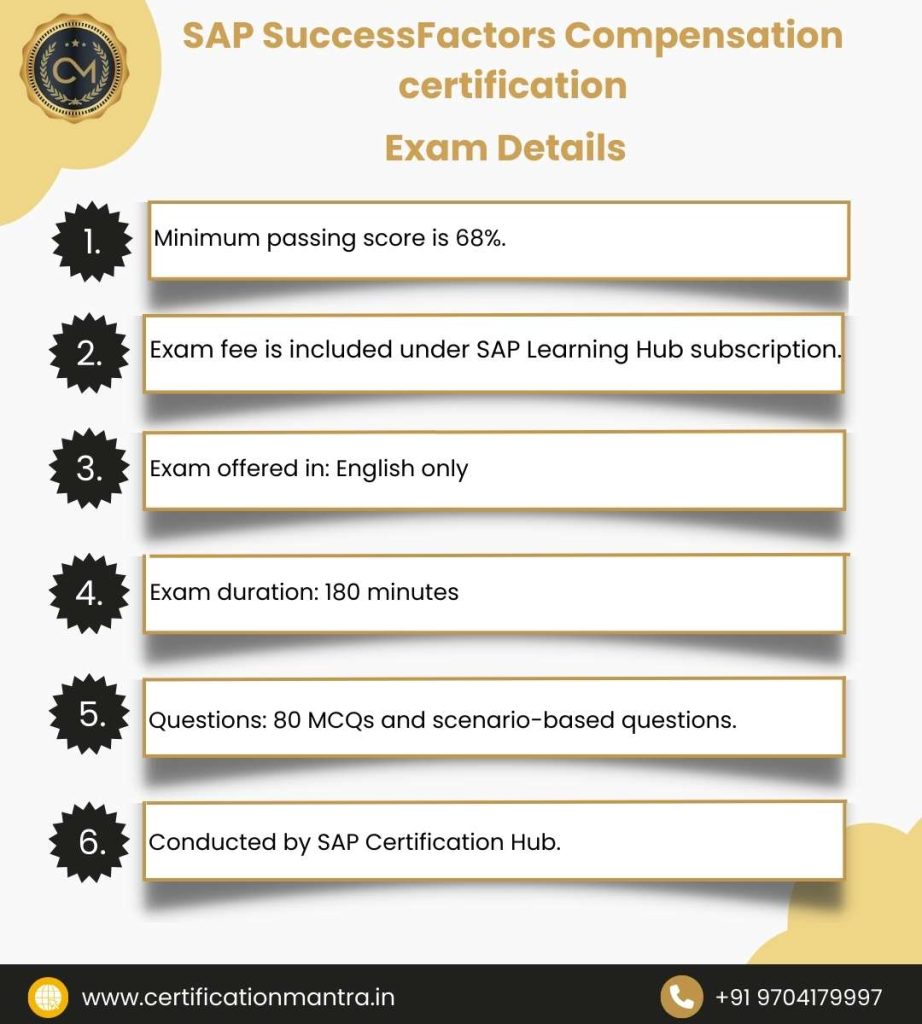
- The exam tests your skills in configuring compensation templates, rules, budgets, and cycles. It validates your professional knowledge of the module. Passing the exam enhances your SAP career significantly.
- The SAP SuccessFactors exam typically lasts about one hour. All questions must be completed within this duration. Good time management helps improve your performance.
- The exam includes multiple-choice and scenario-based questions. They focus on configuration, templates, eligibility, guidelines, and cycle execution. Practical understanding of the module is highly important.
- Job experience is helpful but not mandatory. Many learners clear the exam with proper training and hands-on practice. Freshers can also learn and succeed with structured guidance.
- Budgets define how much salary or bonus managers can allocate during cycles. They can be set using percentages, amounts, or system rules. This ensures spending remains within company limits.
- Eligibility rules decide which employees qualify for salary changes or bonuses. They use criteria like job level, performance rating, or employment type. This ensures only the right employees are included in planning.
- Yes, companies can customise cycles to match their internal compensation process. They can modify templates, guidelines, budgets, and workflow steps. This flexibility supports different business models.
- Modelling helps HR teams test different scenarios before running a compensation cycle. It predicts budget usage and salary outcomes. This supports better decision-making and planning accuracy.
- Yes, the module includes dashboards and detailed reports. HR can track spending, guideline usage, approval status, and cycle progress. These reports improve visibility and control.
- The system uses rules, guidelines, and pay matrices to maintain consistent decision-making. Managers follow system recommendations to avoid bias. This supports a transparent and uniform compensation process.
- A template contains the entire configuration of a compensation cycle, including fields, budgets, and permissions. It standardises how companies manage compensation events. This builds a stable and repeatable planning structure.
- Yes, you can learn Compensation even without deep EC knowledge. However, Employee Central basics will help you understand data flow more clearly. Many real projects require both modules together.
- Basic HR knowledge, logical thinking, and comfort with technology are useful. Good analytical skills help in configuring rules and guidelines. Training builds all necessary technical skills step-by-step.
- Yes, certification increases your chances of getting hired for SAP roles. Companies prefer certified consultants for implementation projects. It adds credibility to your profile.
- Yes, beginners can pass with structured training and consistent practice. Practical exposure makes concepts easier to understand. Following a proper study plan leads to success.
- The exam is moderate but requires a solid understanding of configuration topics. Practicing real scenarios improves clarity and confidence. Understanding templates and rules is key.
- You can learn the basics in a few weeks with regular practice. Hands-on training speeds up your learning. The duration varies based on your pace and background.
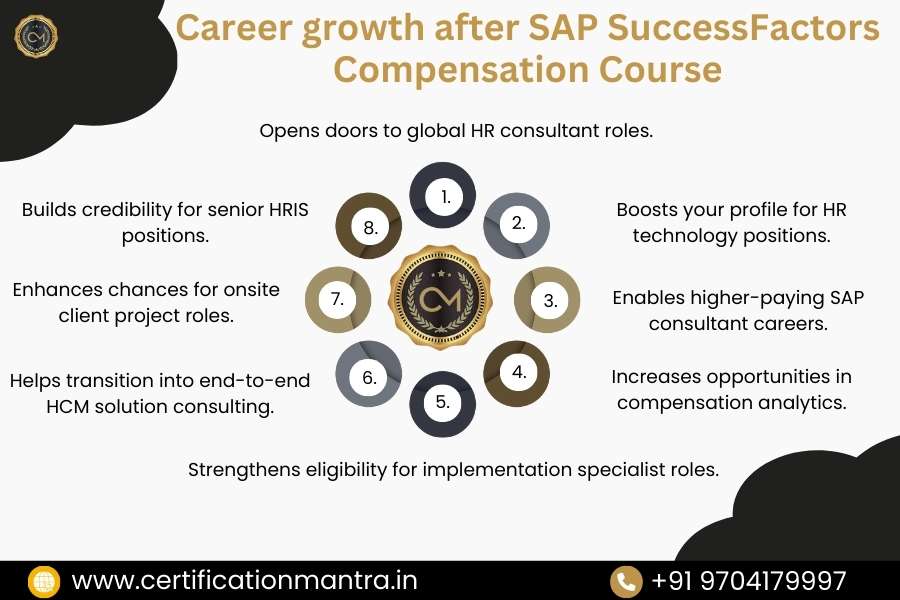
- You can work as an SAP Compensation Consultant, HRIS Analyst, Payroll Specialist, or SAP Functional Consultant. Many companies offer project-based and full-time roles. Certification increases your value in the job market.
- Hyderabad offers expert trainers, practical learning, and strong placement support. The city is a hub for SAP consulting companies. Learners gain both skills and job opportunities.
- Yes, it supports multi-country salary structures, currencies, and compliance. Companies can manage global compensation cycles easily. This makes it suitable for multinational enterprises.
- The module has high demand as companies increasingly digitise HR. Compensation specialists and consultants are needed across industries. This ensures strong long-term global career opportunities.