
Frequently Asked Questions

- SAP SuccessFactors Learning Management is a cloud-based LMS used by companies to train employees. It helps manage courses, ILT, and online learning programs. It ensures structured training and compliance across the organisation.
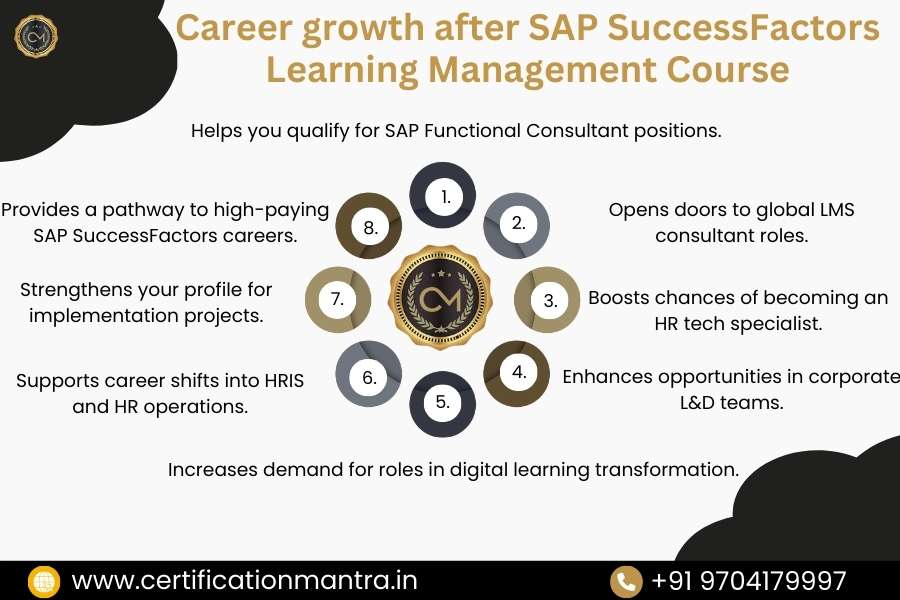
- It is one of the most in-demand HR technology skills globally. Companies rely on it for employee upskilling and compliance training. Learning it opens strong job and career opportunities in the SAP ecosystem.
- Freshers, HR professionals, IT graduates, and corporate trainers can learn it easily. No deep technical background is required to get started. Basic HR knowledge is enough to begin the training.
- Yes, it is user-friendly and designed with a simple admin interface. With guided practice and structured training, most learners pick it up quickly. Consistent hands-on exercises make the learning smoother.
- HR experience is helpful but not mandatory. Anyone with an interest in learning technology or training systems can learn it. Fundamental HR concepts will support faster understanding.
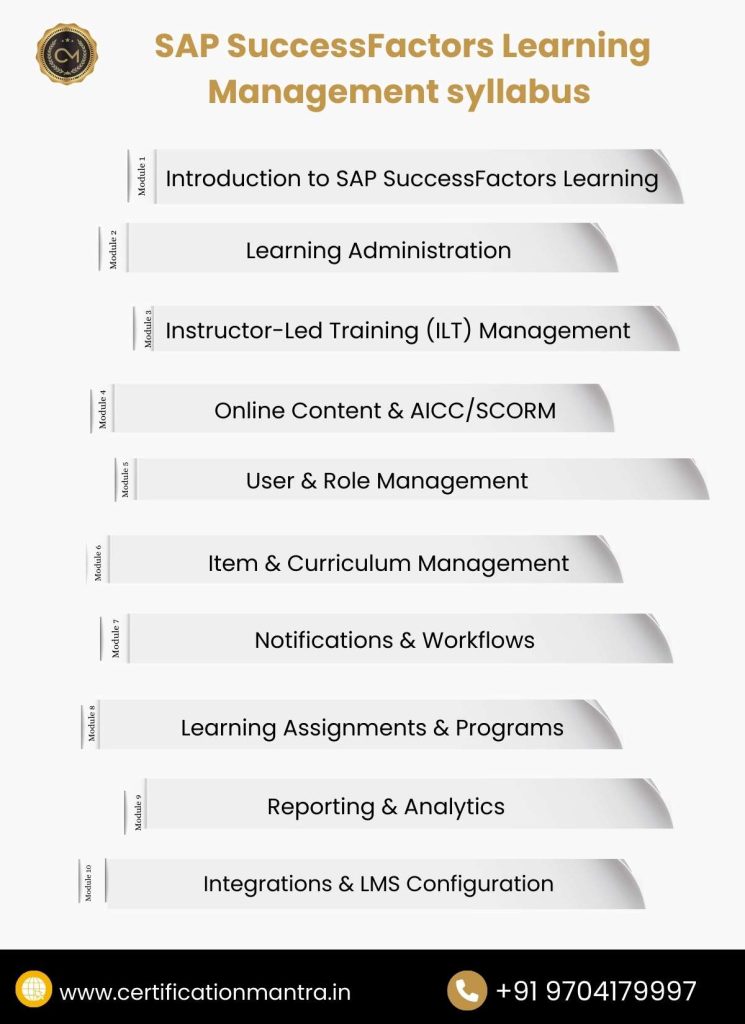
- The training covers items, curricula, assignments, ILT, content management, and reporting. You also learn workflows, notifications, and integration basics. The syllabus aligns with the certification exam.
- Most learners gain good knowledge in 4–6 weeks with regular practice. Hands-on exercises speed up understanding of admin activities. Learning duration depends on your consistency and practice time.
- Yes, SAP LMS professionals are in high demand across IT, HR tech, and multinational companies. It offers stable career growth and excellent salary packages. The module is ideal for a long-term SAP career.
- You can become an SAP LMS Consultant, Administrator, Learning Analyst, or L&D Specialist. Companies also hire for support, implementation, and training roles. Certification adds even more value to job prospects.
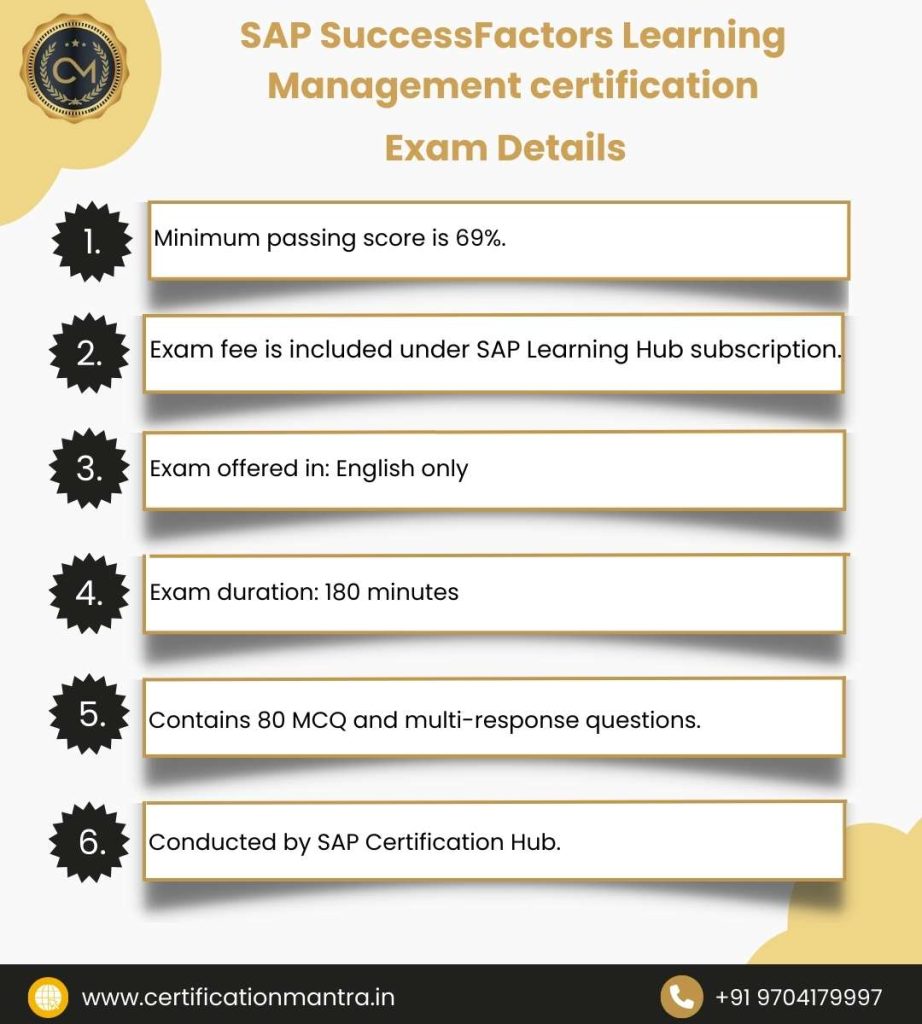
- It is an online exam conducted by SAP to validate your LMS skills. The test includes scenario-based questions on admin tasks and configuration. Passing it boosts your credibility in the SAP marketplace.
- The exam typically includes 80 questions. They are a mix of multiple-choice and multiple-response formats. You must answer within the allotted exam time.
- It is moderate and manageable with proper preparation. Learning the concepts and practising real-time tasks makes it easier.
- Follow the syllabus, practice every admin task, and revise regularly. Take mock tests to build confidence. Focus on items, assignments, curricula, ILT, and reporting.
- Yes, many companies hire freshers who complete the training and certification. Good theoretical and hands-on LMS knowledge helps you stand out. Strong interview preparation improves job chances.
- No, SAP LMS does not require coding knowledge. It is a functional module focused on training operations. Anyone from a non-technical background can learn it easily.
- Yes, it integrates with Employee Central, SAP HCM, SAP JAM, and other tools. This ensures smooth data flow across systems. Integrations help organisations manage learning more efficiently.
- Yes, most training programs provide real-time demo system access. Hands-on practice is crucial to understanding daily admin tasks. It makes learning faster and more practical.
- Industries like IT, banking, manufacturing, retail, and healthcare use LMS. Any company needing structured training can implement it. This increases the demand for LMS professionals.
- SCORM is a standard for online learning content. It ensures compatibility of courses inside the LMS. LMS admins use SCORM packages for e-learning programs.
- ILT stands for Instructor-Led Training. It manages classroom and virtual sessions with instructors. LMS helps schedule, track, and evaluate ILT programs.
- An item represents a training course or learning activity. It can be online, classroom-based, or blended. Items are assigned to learners through curricula or profiles.
- A curriculum is a structured set of learning items grouped for a training path. It helps track completion and renewals. Curricula are used widely for onboarding and compliance training.
- Assignment profiles automate learning assignments. They assign courses to users based on rules or attributes. This saves time and ensures consistent training delivery.
- Notifications are automated emails triggered for learning events. They inform learners about enrollments, deadlines, and completions. Admins can customise each notification template.
- SAP LMS provides powerful built-in reports for tracking training effectiveness. Reports help monitor completions, compliance, and learning history. They support decision-making for HR and management.
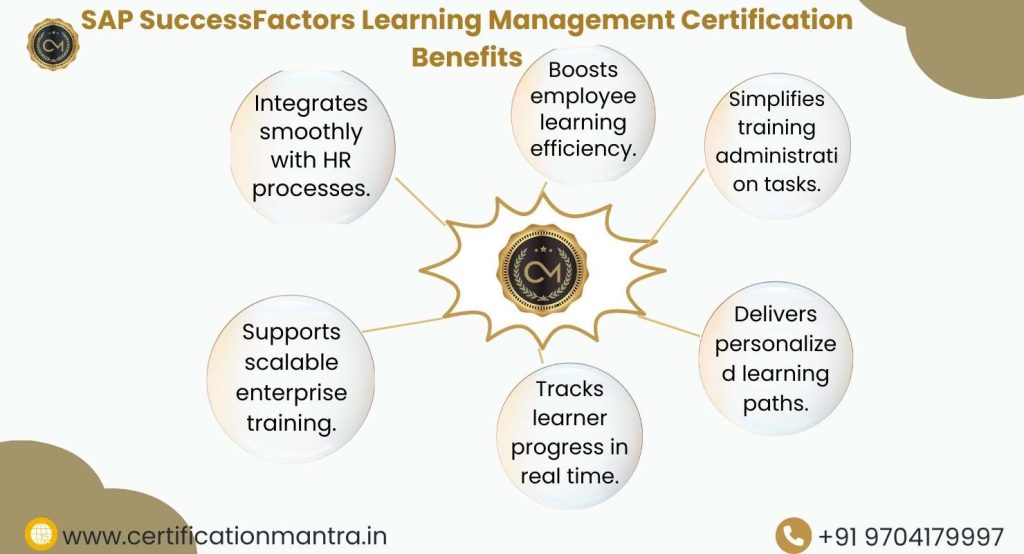
- Certification proves your expertise and credibility in the SAP market. It increases job opportunities and salary potential. Many employers prefer certified professionals for LMS roles.
- Yes, many professionals move from HR, IT, or training backgrounds into SAP LMS. The module is flexible and easy to transition into. With practice, you can build a strong SAP career.
- Yes, as companies move to cloud HR systems, LMS demand is rising quickly. More organisations want skilled LMS consultants for implementation. This creates strong career opportunities.
- Salary varies based on experience and role, but LMS consultants earn competitive packages. Freshers also receive attractive starting salaries in SAP roles. Certified professionals often earn higher.
- SAP LMS offers enterprise-level capabilities, powerful integrations, and global scalability. It supports compliance, blended learning, and complex training needs. Its strong SAP ecosystem makes it a preferred choice worldwide.