


- Choose a trusted training provider
- Complete the training program
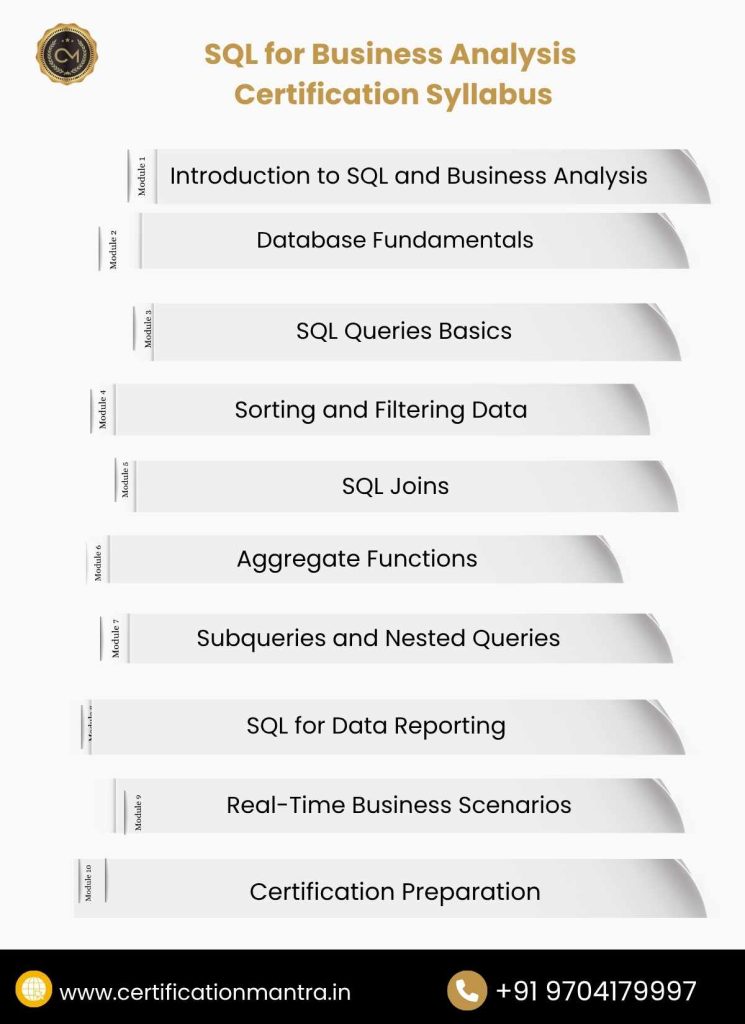
- Learn all required modules
- Attend practical sessions
- Practice SQL exercises
- Complete assignments if required
- Review important concepts
- Register for the certification process
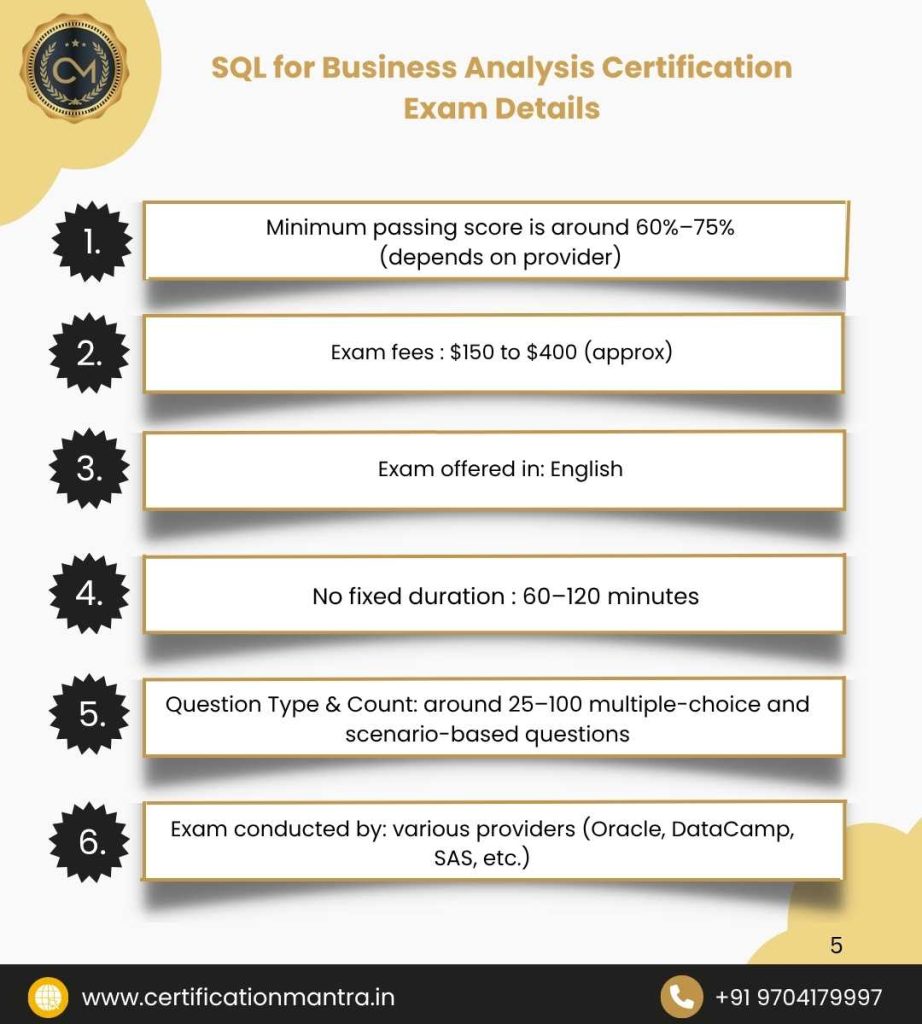
- Follow exam instructions carefully
- Complete the assessment successfully
Frequently Asked Questions

- It demonstrates your SQL skills for business analysis careers.
It focuses on reporting and data analysis.
It helps professionals work with business data.
Business analysts can benefit.
Data professionals can enroll.
Freshers can also join.
Advanced coding is not required.
Basic computer knowledge helps.
SQL is beginner-friendly.
SQL queries.
Database concepts.
Business reporting skills.
Yes, freshers can enroll.
It builds job-ready skills.
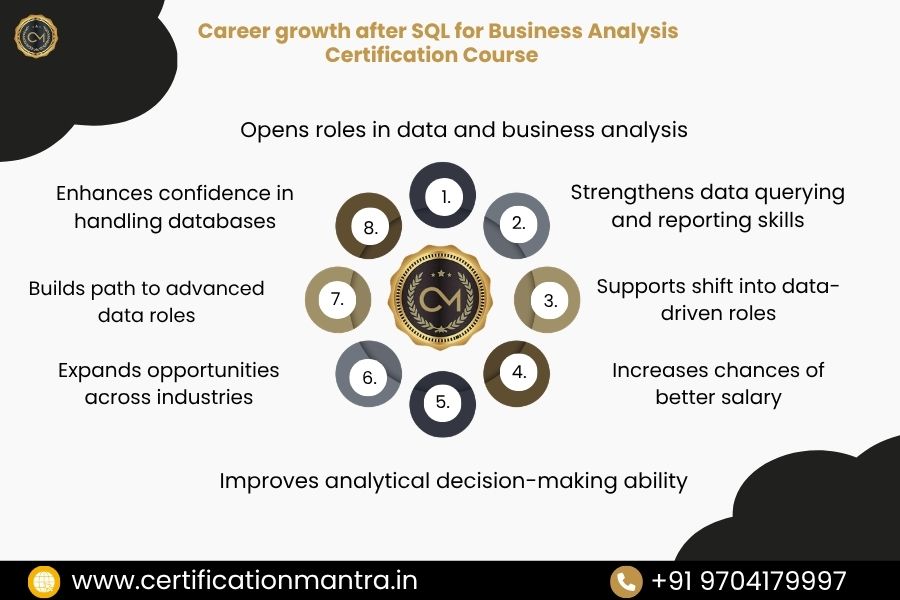
It improves career opportunities.
Yes, many institutes offer online training.
Flexible schedules are available.
Weekend classes may also be offered.
Duration varies by provider.
Some courses finish in weeks.
Flexible schedules are common.
Many institutes include projects.
Hands-on practice improves learning.
Real datasets may be used.
SQL is beginner-friendly.
Practice makes it easier.
Training support helps.
Business Analyst roles.
Data Analyst roles.
Reporting Analyst roles.
Recognition depends on provider.
Skills are highly valuable.
Employers value SQL knowledge.
It stores structured information.
Businesses use databases daily.
SQL helps access data.
They combine data from tables.
They improve reporting.
They are widely used.
They are queries inside queries.
They solve complex tasks.
They improve analysis.
Yes, they can.
Business knowledge helps.
Training supports beginners.
Yes, it can improve salary opportunities.
SQL skills are in demand.
Career growth becomes easier.
Many institutes provide practice tests.
They improve confidence.
Preparation becomes easier.
Some providers offer support.
Interview preparation may be included.
Check with your institute.
SQL tools vary.
Reporting tools may be introduced.
Database tools may be used.
No mandatory experience is required.
Beginners can learn.
Training helps.
Yes, flexible batches help.
Weekend classes are common.
Online learning is available.
Choose a provider.
Complete registration.
Start learning.
IT companies.
Finance firms.
Healthcare organizations.
Not always mandatory.
It gives an advantage.
Employers value certified skills.
Data extraction.
Report generation.
Business insights.
Yes, many professionals do.
Analytics roles become easier.
Skills are transferable.
Yes, expert guidance is available.
Flexible schedules help learners.
Practical sessions are included.
Yes, very commonly.
It helps analyze data.
It improves decision-making.
Practice regularly.
Use mock tests.
Follow expert guidance.
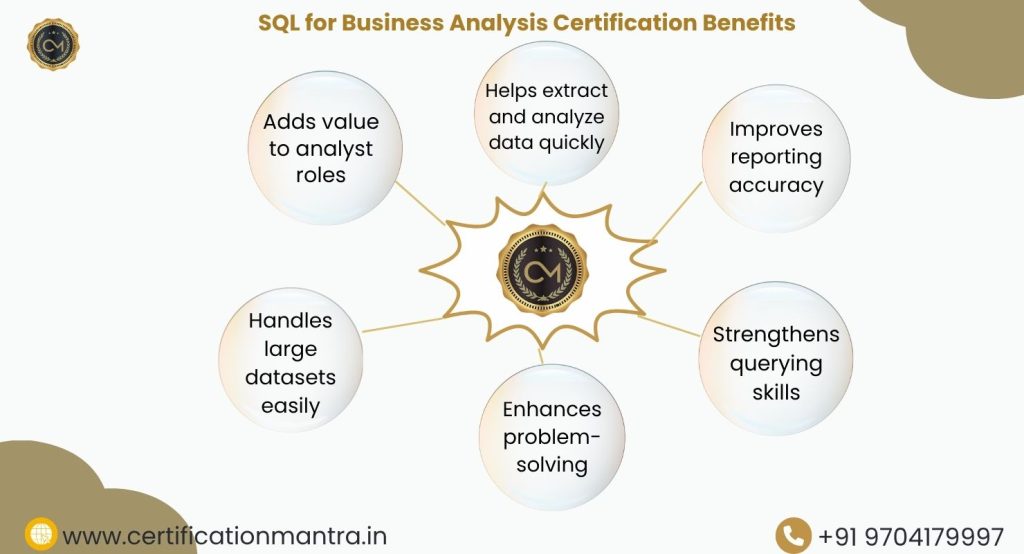
It helps build practical SQL skills.
It improves career opportunities.
It prepares professionals for business analysis roles.