
The Professional Cloud Developer certification has three levels: Fundamental, Intermediate, and Advanced. The Fundamental level covers basic cloud concepts. The Intermediate level focuses on practical development skills. The Advanced level prepares you for complex, real-world cloud projects.

Frequently Asked Questions

It is a globally recognized certification for cloud application developers.
It validates your ability to build scalable cloud-native solutions.
It focuses on development, deployment, and monitoring skills.
It is ideal for developers working in cloud environments.
It suits DevOps professionals and backend engineers.
It also benefits IT professionals shifting to cloud roles.
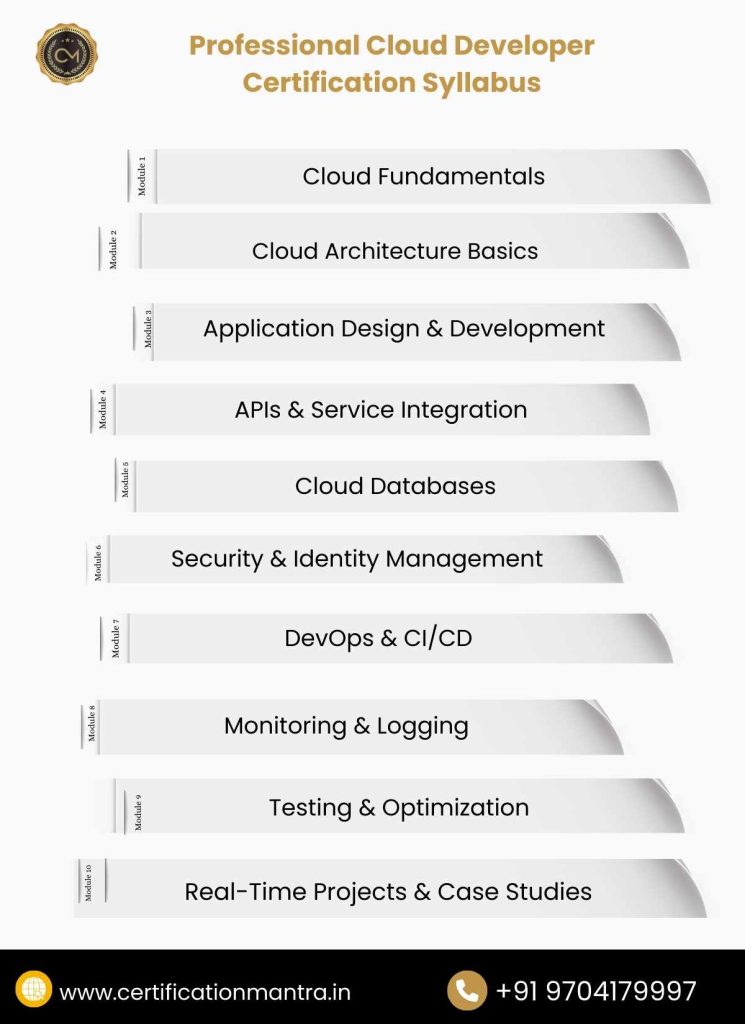
Application design and development are key areas.
Security, APIs, and database management are included.
Monitoring and deployment knowledge is also tested.
Yes, basic programming knowledge is necessary.
Hands-on development experience is highly recommended.
Understanding APIs and integrations is important.
The exam is moderately challenging.
Practical experience makes it easier.
Structured preparation improves success rate.
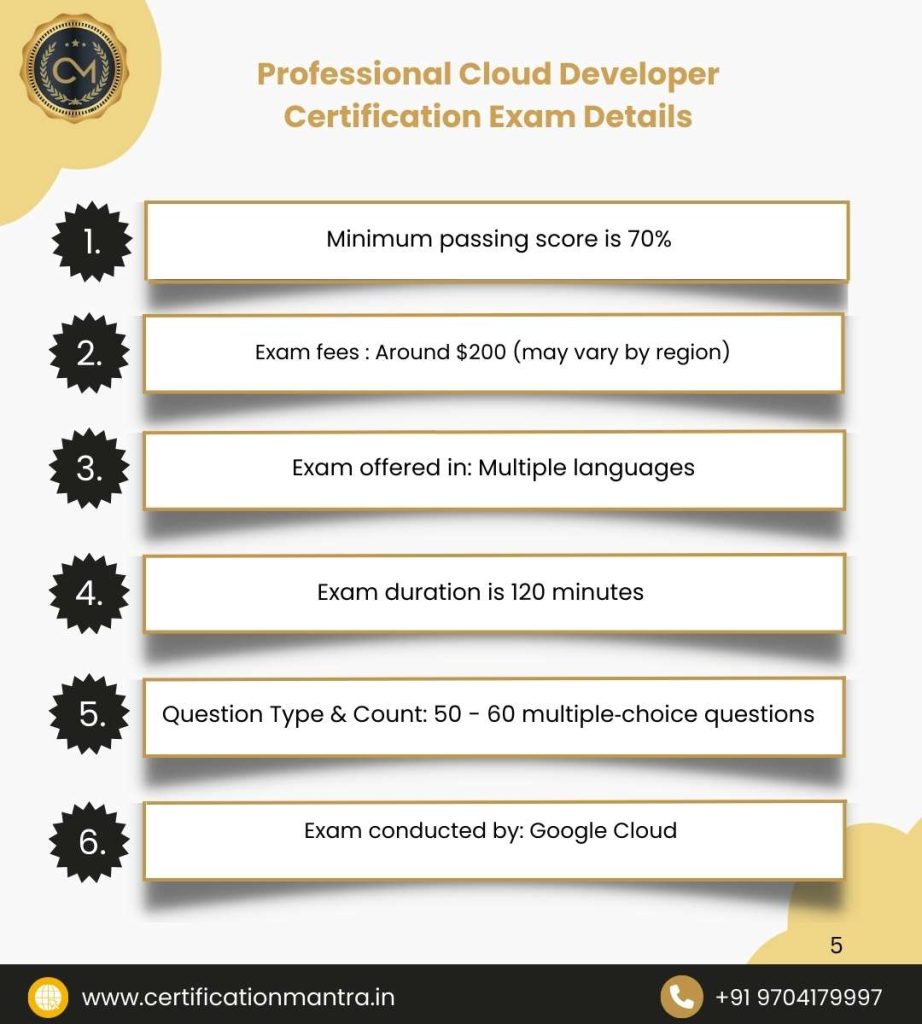
Most exams are 90 to 120 minutes long.
Time management is important.
Question count varies by provider.
Passing score varies by certification body.
Usually ranges between 65% to 75%.
Check official guidelines for accuracy.
It is not mandatory but highly recommended.
Hands-on exposure improves confidence.
Training programs help beginners prepare effectively.
Yes, if they have programming basics.
Fundamental cloud knowledge is required.
Practical practice improves performance.
Follow the official exam blueprint.
Practice real-time scenarios.
Take mock tests regularly.
Yes, it is recognized internationally.
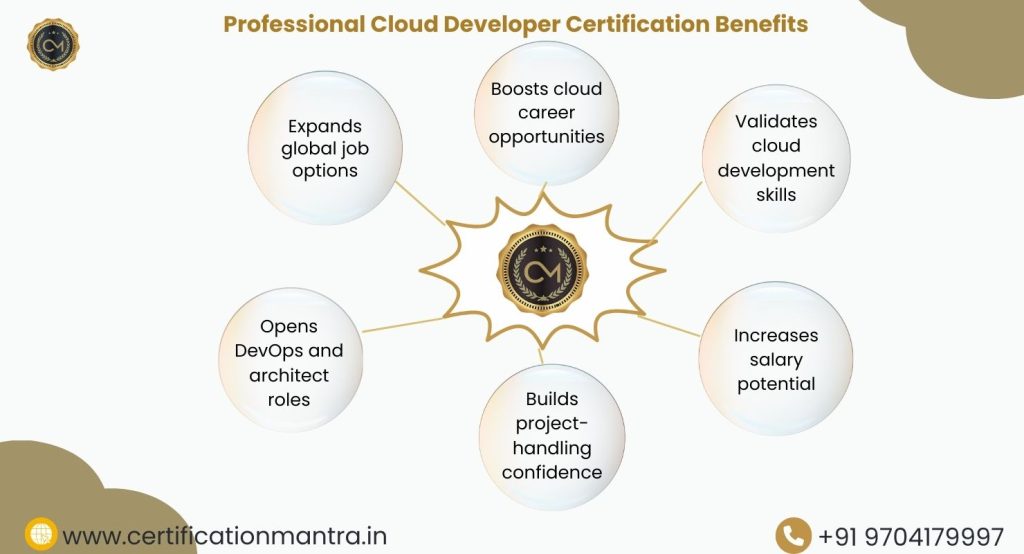
It improves global job opportunities.
It enhances professional credibility.
Some certifications require renewal.
Validity depends on provider policies.
Always check recertification rules.
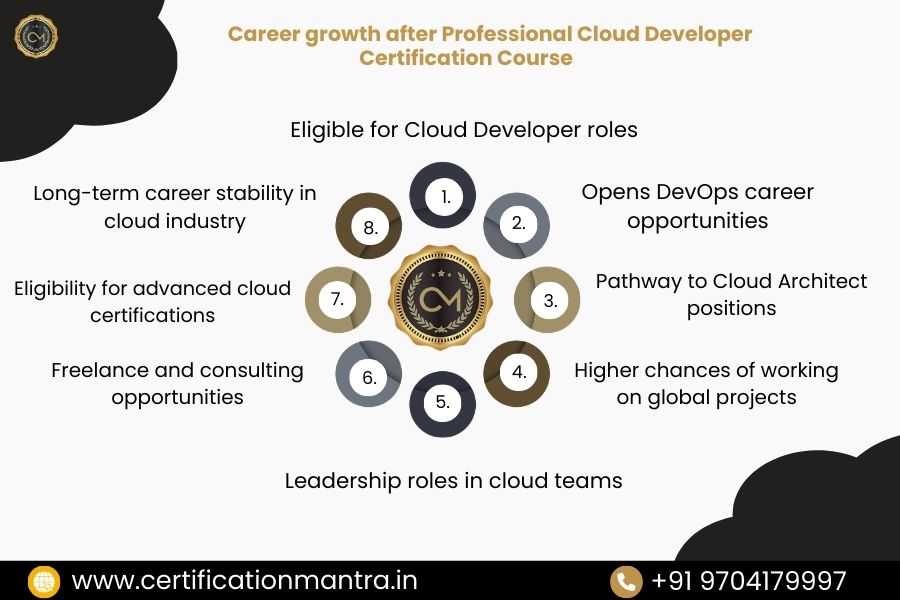
Cloud Developer is the primary role.
DevOps Engineer opportunities increase.
Cloud Architect pathway opens gradually.
Cloud deployment tools are included.
Monitoring and logging tools are covered.
CI/CD platforms are part of syllabus.
Training is not always mandatory.
But structured guidance improves success rate.
Professional Cloud Developer Certification Training in Hyderabad helps with focused preparation.
Yes, most providers offer online proctored exams.
Stable internet connection is required.
ID verification is mandatory.
Attempts depend on provider policy.
Waiting period may apply between retakes.
Fees apply for each attempt.
Mostly scenario-based theoretical questions.
Practical knowledge is required to answer correctly.
Case-study questions are common.
Preparation usually takes 6–10 weeks.
It depends on your prior experience.
Consistent practice reduces preparation time.
Yes, they improve confidence.
They identify weak areas.
They simulate real exam environment.
Basic understanding is beneficial.
CI/CD knowledge helps significantly.
It strengthens application deployment skills.
Cloud industry demand is growing rapidly.
Certified developers earn competitive salaries.
Long-term growth opportunities are strong.
Yes, certified professionals earn more.
It validates advanced skillsets.
It improves negotiation power.
Yes, many professionals transition into cloud roles.
It validates industry-ready skills.
Practical exposure makes switching easier.
IT services and product companies.
Banking and fintech sectors.
Healthcare and e-commerce industries.
Yes, IAM and encryption concepts are included.
Secure application deployment is tested.
Compliance knowledge is beneficial.
Yes, SQL and NoSQL basics are important.
Cloud database services are covered.
Performance optimization is tested.
Demand for cloud developers is increasing rapidly.
Hyderabad IT market shows strong growth.
Certification improves hiring chances.
Some providers require periodic renewal.
Continuous learning is encouraged.
Advanced certifications can follow.
It provides structured, exam-focused preparation.
Hands-on practice improves confidence.
Expert guidance increases first-attempt success rate.