

- Visit the official certification website to begin the registration process.
- Create a certification account if you are registering for the first time.
- Choose the Professional Cloud Security Engineer certification exam.
- Select your preferred exam date and testing format.
- Decide whether to take the exam online or at a testing center.
- Complete the exam payment during registration.
- Review the exam guidelines and identification requirements.
- Prepare your testing environment if you choose the online option.
- Log in on the scheduled date and follow the exam instructions carefully.
- After completing the test, check your results through the certification portal.
Frequently Asked Questions

- It is a professional certification focused on securing cloud environments.
It validates skills in protecting data, networks, and cloud infrastructure.
The certification proves expertise in cloud security practices.
Cloud engineers and cybersecurity professionals can benefit from it.
IT administrators and DevOps engineers may also find it valuable.
Anyone interested in cloud security careers can pursue this certification.
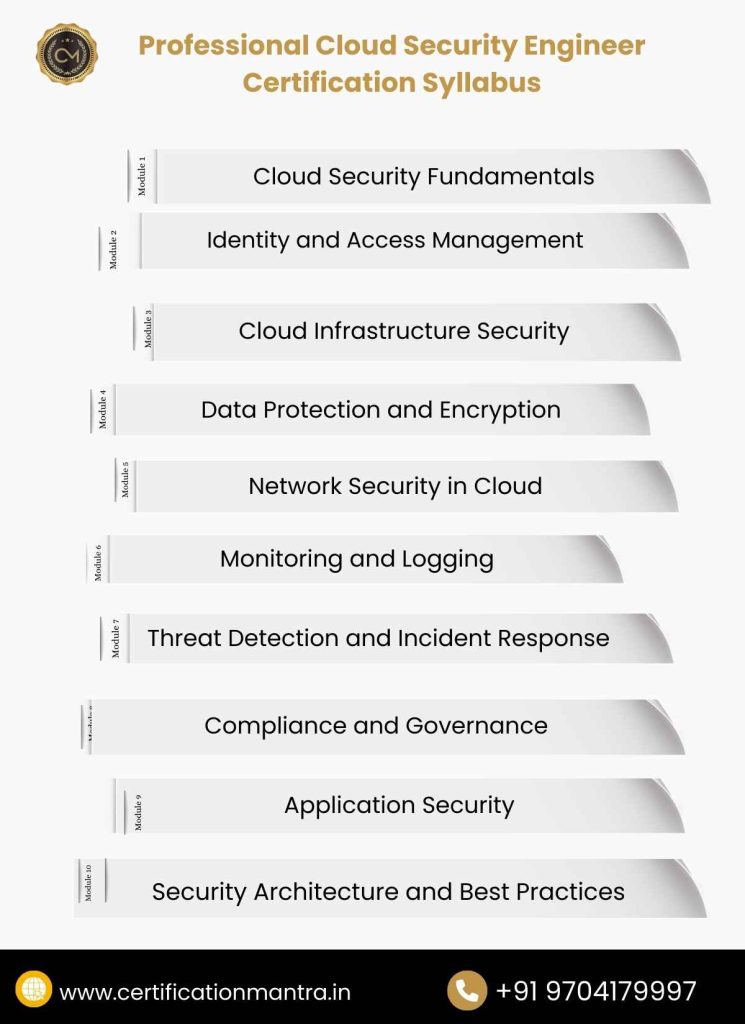
The exam tests cloud security architecture and access management.
It also focuses on data protection, monitoring, and threat response.
Candidates must understand practical security strategies in cloud systems.
The exam includes identity management, encryption, and network security.
Monitoring, logging, and threat detection are also covered.
It also tests knowledge of governance and compliance concepts.
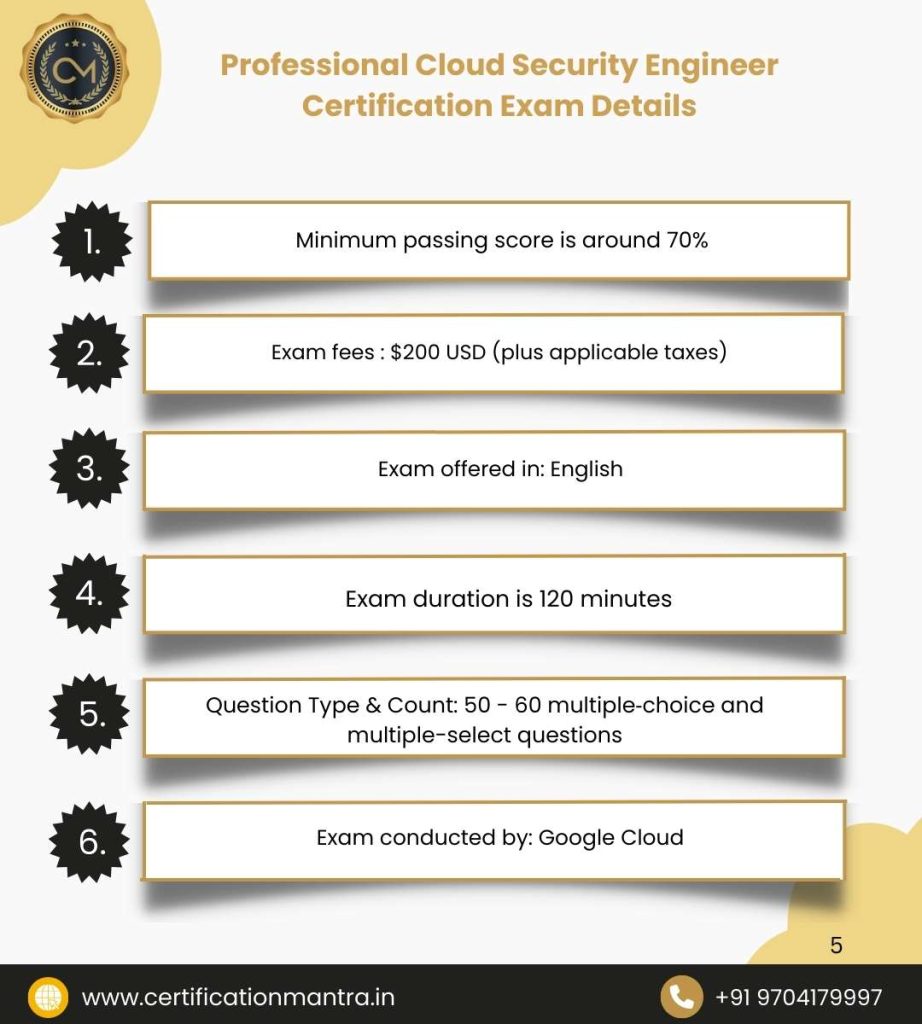
The exam duration is typically around two hours.
Candidates must answer all questions within the given time.
Proper time management is important during the test.
The exam usually contains multiple-choice questions.
Some questions may require selecting more than one correct answer.
Scenario-based questions are included to test practical knowledge.
The certification exam fee is generally around $200 USD.
Additional taxes may apply based on your location.
Always check official sources for the latest pricing details.
Prior experience with cloud platforms is recommended.
Basic knowledge of networking and security is also helpful.
Hands-on practice can make exam preparation easier.
Start by reviewing the official exam objectives carefully.
Practice with real cloud environments and lab exercises.
Mock tests can help improve confidence and readiness.
Without proper preparation, the exam can be difficult.
Understanding real-world security scenarios is important.
Regular study and practice are key to passing the exam.
The focus of cloud security engineering is to protect cloud-based environments.
It includes securing data, infrastructure, and user access.
Professionals design and manage secure cloud environments.
Identity and access management controls user permissions.
It ensures only authorized users access cloud resources.
IAM is a critical part of cloud security architecture.
- Encryption protects sensitive data from unauthorized access.
It converts data into a secure format during storage or transfer.
This ensures information remains safe in cloud environments.
Monitoring helps detect suspicious activity in cloud systems.
It helps security teams take rapid action against security issues.
Continuous monitoring improves overall security posture.
Technology companies rely heavily on cloud security engineers.
Financial institutions and healthcare organizations also need them.
Many industries require experts to protect sensitive data.
Yes, beginners can start with cloud fundamentals.
Gradually they can learn advanced security concepts.
Practical training helps build confidence and knowledge.
They use monitoring tools and vulnerability scanners.
Identity management and encryption tools are also common.
Cloud-native security platforms are widely used.
It refers to designing secure cloud systems and infrastructure.
Security architecture includes policies and protection mechanisms.
It ensures cloud services operate safely and efficiently.
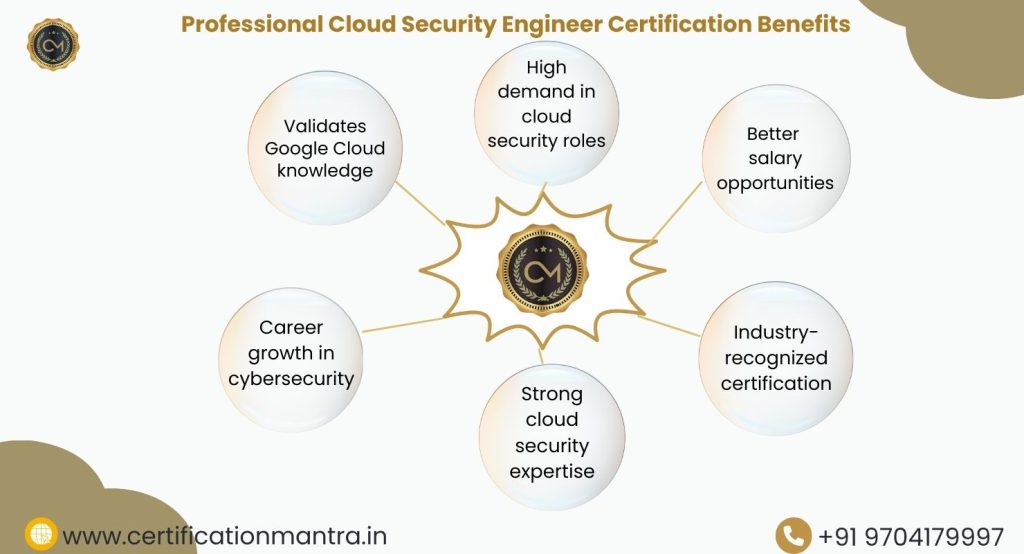
It validates your expertise in cloud security practices.
Certified professionals gain credibility in the IT industry.
It can also improve career opportunities and salary potential.
Preparation time depends on your experience level.
Many candidates study for several weeks before the exam.
Regular practice helps speed up the learning process.
Yes, many candidates choose online proctored exams.
Testing centers may also be available in some locations.
Both options follow strict exam security guidelines.
They protect cloud infrastructure and applications.
They design security solutions and monitor threats.
Their goal is to maintain a secure cloud environment.
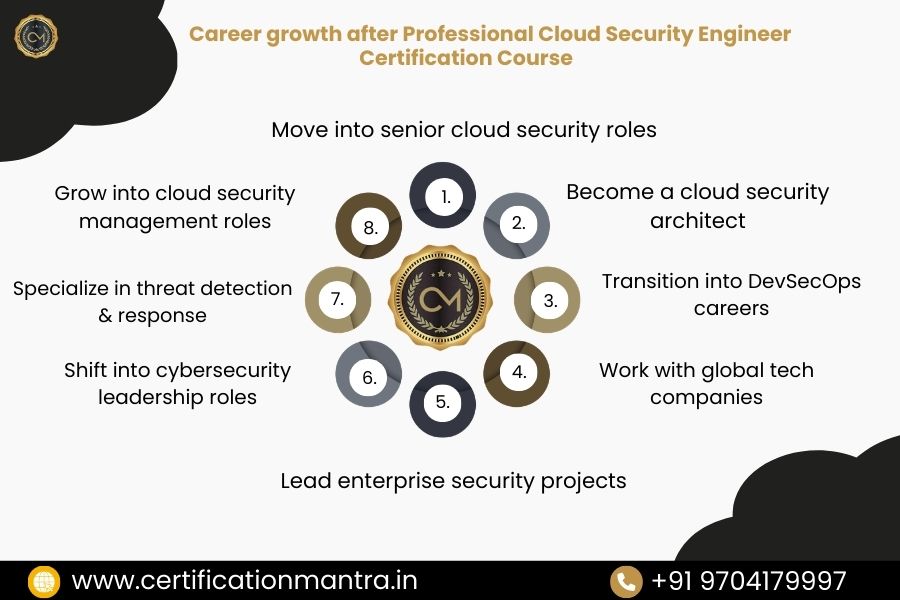
- Professionals can become cloud security engineers.
Some move into security architecture or consulting roles.
Others advance into leadership positions in cybersecurity.
Certification providers update exams periodically.
Updates reflect changes in cloud technology and security trends.
This ensures the certification remains relevant.
Risk management identifies and reduces potential security threats.
This helps companies secure sensitive information and their systems.
Proper risk management improves overall security strategy.
Compliance ensures organizations follow security regulations.
It includes industry standards and data protection laws.
Following compliance improves trust and security.
Threat detection identifies potential cyberattacks.
Monitoring tools help detect suspicious activities early.
Early detection reduces damage and improves response.
Best practices include strong authentication and encryption.
Regular monitoring and vulnerability scanning are important.
Following security policies helps protect cloud systems.
Yes, certifications can increase professional credibility.
Employers often prefer certified security professionals.
This can lead to better career growth and salaries.
Start by learning cloud computing fundamentals.
Build skills in networking, cybersecurity, and encryption.
Hands-on practice and certifications can support your career path.