

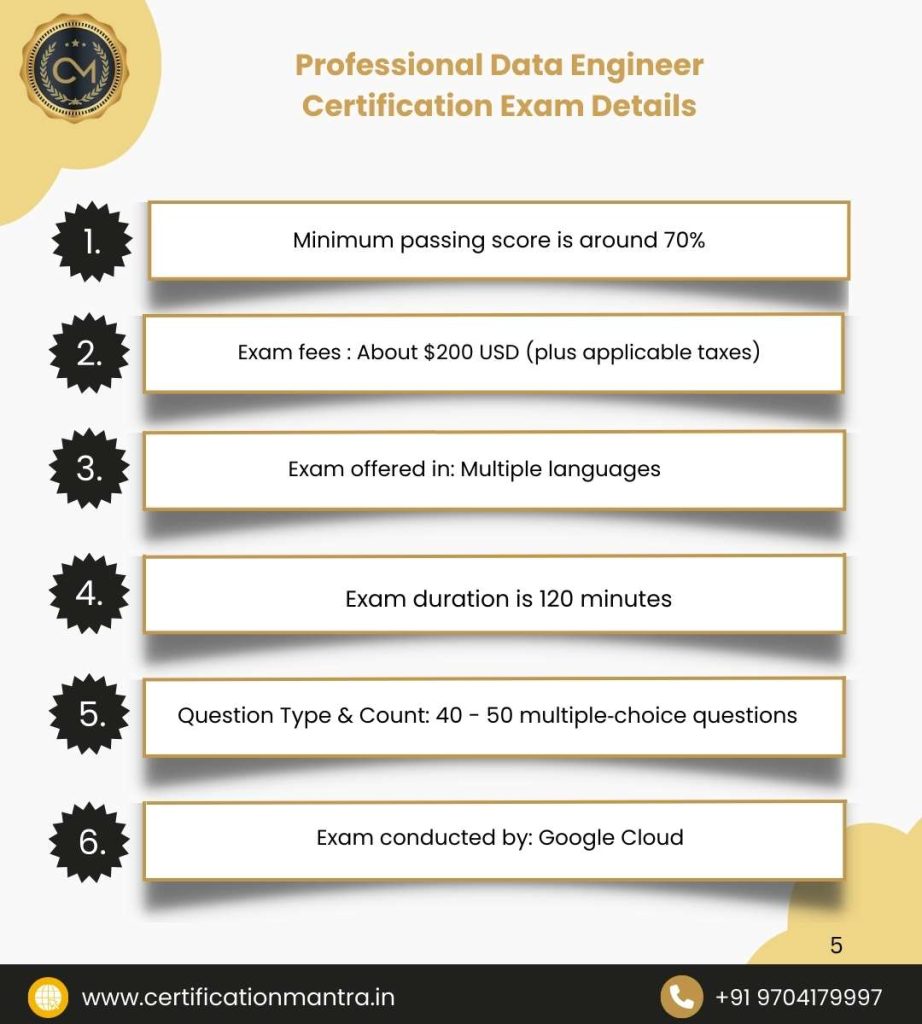
- Start by creating an account on the official certification platform.
- Review the exam syllabus and eligibility requirements carefully.
- Choose the certification exam you want to schedule.
- Select a convenient exam date and testing mode (online or test center).
- Complete the registration process and pay the exam fee.
- Verify your identity and follow the exam guidelines provided.
- Prepare your system and internet connection if taking the exam online.
- Attempt the exam within the allotted time and follow instructions carefully.
- Submit your answers and wait for the official results.
- After passing, you will receive your Professional Data Engineer certification.
Frequently Asked Questions

- It is a professional certification that validates your ability to design and manage scalable data systems.
- It focuses on building reliable data pipelines and processing large datasets.
- The certification is highly valued in modern cloud and data-driven industries.
- This certification is suitable for IT professionals, developers, and data analysts.
- It is also ideal for professionals interested in cloud and big data technologies.
- Anyone interested in building data engineering skills can pursue it.
- Strong knowledge of data pipelines, storage systems, and data processing tools is required.
- Understanding cloud platforms and analytics systems is also important.
Programming knowledge in languages like Python or SQL can be helpful.
- The exam is considered moderately challenging for beginners.
- Candidates need both theoretical knowledge and practical experience.
- Proper preparation and practice tests can help improve success rates.
- Preparation time usually depends on your previous experience.
- Many professionals prepare within two to three months.
- Consistent practice and real-world examples help speed up learning.
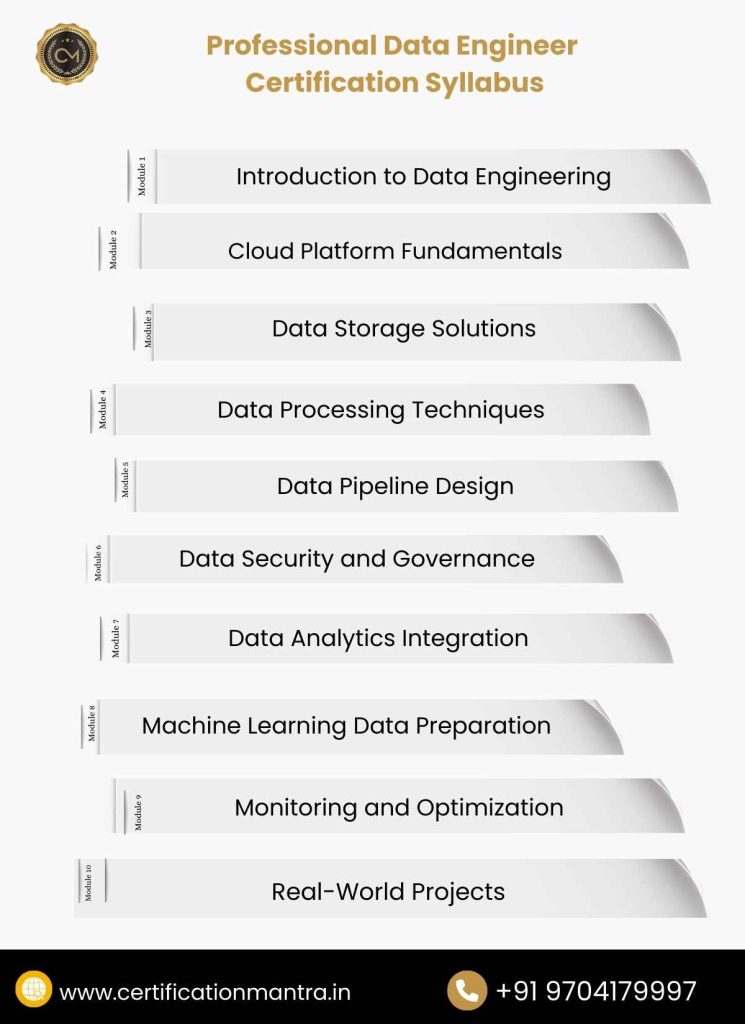
- The exam covers data storage, processing, and pipeline design.
- It also includes topics like security, monitoring, and optimization.
- Candidates are tested on real-world data engineering scenarios.
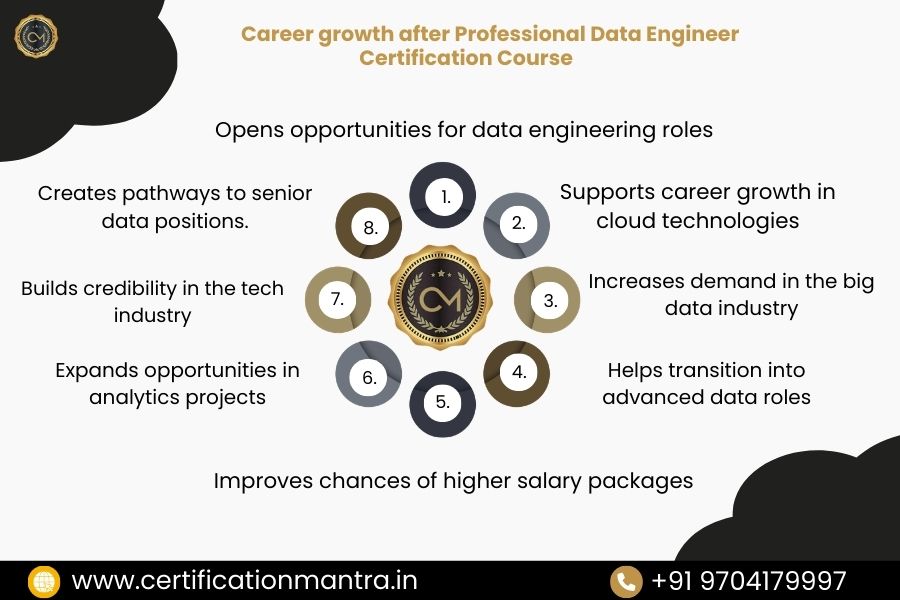
- Yes, it significantly improves career opportunities in the data industry.
- Certified professionals are highly valued in cloud-based companies.
- It also helps professionals move into advanced data engineering roles.
- Yes, beginners can take the certification with proper preparation.
- Learning the fundamentals of data engineering is recommended first.
- Training programs can help beginners understand the concepts faster.
- Data engineers often work with cloud platforms and big data tools.
- They use technologies for data storage, transformation, and processing.
- Analytics and machine learning systems are also commonly integrated.
- Certified professionals can work as Data Engineers or Cloud Data Engineers.
- Some also move into Data Architect or Big Data Engineer roles.
- The certification opens opportunities in analytics and AI projects.
- Data engineers design systems that collect and process large datasets.
- They build reliable pipelines for storing and analyzing data.
- Their work supports analytics and business decision-making.
- Many industries rely on data engineering skills.
- Technology, finance, healthcare, and e-commerce companies hire them.
- Organizations that work with large data systems need these professionals.
- Data engineering helps organizations manage and process large volumes of data.
- It ensures that reliable data is available for analytics and decision-making.
- Strong data infrastructure helps companies gain valuable insights and competitive advantage.
- Yes, cloud platforms are widely used for modern data systems.
- They allow scalable storage and data processing solutions.
- Understanding cloud infrastructure is very beneficial.
- Yes, data engineers often prepare datasets for machine learning models.
- They create pipelines that feed data into AI systems.
- This collaboration improves data-driven decision-making.
- Languages like Python, SQL, and Java are commonly used.
- They help build and manage data pipelines.
- Programming knowledge improves automation and processing efficiency.
- A data pipeline is a system that moves and processes data automatically.
- It gathers raw data from multiple sources.
- The pipeline transforms the data into useful information.
- Big data refers to extremely large datasets generated by organizations.
- These datasets require advanced tools to process and analyze.
- Data engineers design systems that manage this large-scale data.
- Data transformation converts raw data into a structured format.
- It prepares the data for analysis or reporting.
- This step improves data quality and usability.
- Data governance ensures data is secure and properly managed.
- It includes policies for data access, quality, and compliance.
- Organizations rely on governance to maintain reliable data systems.
- Data engineering ensures organizations can process and analyze data efficiently.
- It supports business intelligence and analytics initiatives.
- Reliable data systems help companies make better decisions.
- A Professional Data Engineer designs systems that collect, process, and manage large datasets.
- They build reliable data pipelines that move data from different sources to analytics platforms.
- Their work helps organizations make better data-driven decisions.
- Data engineers work with tools for data processing, storage, and workflow automation.
- These tools help manage large datasets and transform raw data into useful information.
- Modern cloud platforms also provide integrated tools for scalable data engineering.
- Yes, coding knowledge is usually helpful for building and managing data pipelines.
- Languages like Python and SQL are commonly used in data engineering projects.
- Basic programming skills make it easier to automate and optimize data workflows.
- Most professional certifications remain valid for a few years depending on the provider.
- After the validity period, professionals may need to renew or update their certification.
- Renewal ensures that certified experts stay updated with the latest technologies.
- Yes, many professionals use this certification to transition into data engineering roles.
- It provides knowledge of modern data tools and cloud technologies.
- This makes it easier to move from traditional IT roles into data-focused careers.
- Yes, practical experience helps you understand real-world data engineering problems.
- Working on projects improves your ability to design and manage data pipelines.
- Hands-on learning also builds confidence for solving exam scenarios.
- Many industries rely on data engineers to manage their data systems.
- Technology, finance, healthcare, retail, and e-commerce companies hire them.
- Any organization working with large data volumes needs data engineering expertise.
- Yes, fresh graduates interested in data and cloud technologies can pursue it.
- Learning the fundamentals of databases, programming, and cloud platforms helps.
- With proper preparation, beginners can build strong data engineering skills.
- A Data Engineer builds the systems that collect and process data.
- A Data Analyst specializes in examining data to generate meaningful insights.
- Both roles work together to support data-driven decision-making.